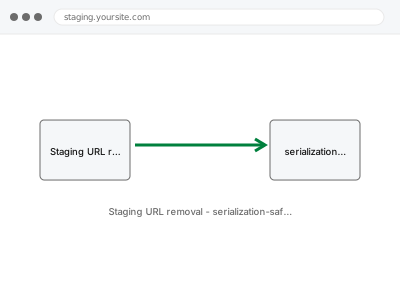
Staging URL removal – serialization-safe replace
Leftover staging URLs removed with a serialization-safe method, not a plain find-and-replace.
A layer of problems sits underneath WordPress entirely, in the hosting account and the server configuration it depends on — DNS records, SSL certificates, the PHP version and its resource limits, server-level caching, and for larger operations, a multisite network spanning several of those at once.
Showing 49–56 of 56 fixes
Leftover staging URLs removed with a serialization-safe method, not a plain find-and-replace.
A subdomain created and correctly mapped to the right folder.
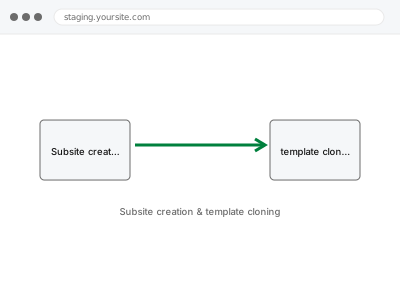
A new subsite created, optionally cloned from a template rather than starting blank.
One subsite carefully extracted from the network into its own standalone install.
Test and placeholder content found and removed, with anything ambiguous flagged first.
Uptime monitoring and alert routing set up — with a plain warning about the monitor that goes quiet.
User roles corrected to match across subsites, not left to drift by whoever added someone last.
wp-config.php cleaned of leftover migration and development cruft, hardened to current practice.
A layer of problems sits underneath WordPress entirely, in the hosting account and the server configuration it depends on — DNS records, SSL certificates, the PHP version and its resource limits, server-level caching, and for larger operations, a multisite network spanning several of those at once. None of it is visible from inside wp-admin, which is exactly why it gets missed: a DNS record pointing at the wrong IP, a PHP memory limit set by the hosting plan rather than the site’s actual needs, an SSL certificate that renewed on the server but never updated in WordPress’s own settings.
What these fixes have in common is that they happen in the hosting control panel, the DNS zone, or the server configuration itself, not inside a WordPress plugin — because that’s genuinely where the setting lives, and a plugin can only work around a server limit, not remove it. Multisite networks compound this: a change made at the network level affects every subsite at once, so a fix has to account for all of them, not just the one that reported the problem. The work is precise because a wrong change at this level affects the whole site, not one page.