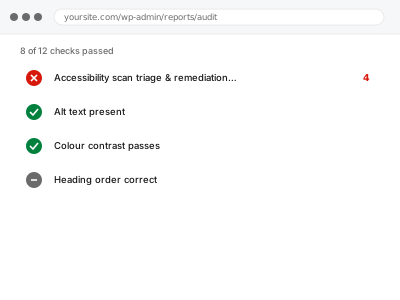
AIX-014
Accessibility scan triage & remediation plan
Existing scan findings turned into a prioritised, sequenced remediation plan.
Standard Report deliverable
Needs: WP admin login

Some of what a site needs isn’t a fix at all — it’s an honest, written account of where things currently stand: what plugins are installed and why, whether the SSL configuration actually passes a proper grade, whether a backup would actually restore, what a new developer would need to know on their first day.
AIX-014 Accessibility scan triage & remediation plan
$109.3248 hours
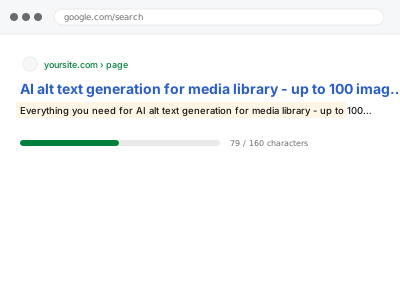 AIX-001 AI alt text generation for media library - up to 100 images
$109.3248 hours
AIX-001 AI alt text generation for media library - up to 100 images
$109.3248 hours
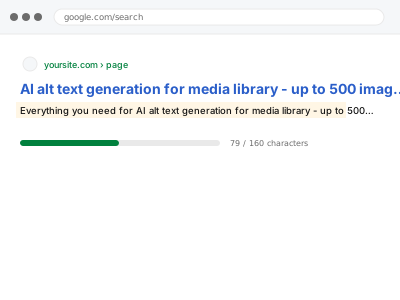 AIX-002 AI alt text generation for media library - up to 500 images
$219.4972 hours
AIX-002 AI alt text generation for media library - up to 500 images
$219.4972 hours
Showing 1–16 of 52 fixes
Existing scan findings turned into a prioritised, sequenced remediation plan.
Alt text generated for up to 100 images from what they actually show — alt text only.
Alt text generated for up to 500 images from actual content — the larger tier.
An AI chatbot installed and wired to the knowledge sources you specify.
AI-powered site search implemented and your content indexed for it.
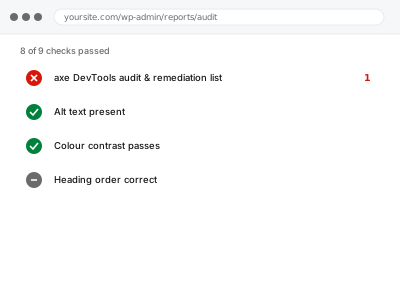
An axe DevTools scan with developer-ready technical detail on every issue found.
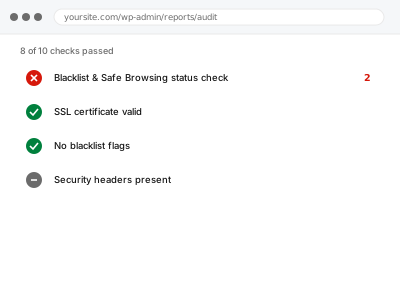
Your domain checked against Google Safe Browsing and major blacklists — status, not delisting.
A confirmed blacklist or Safe Browsing flag submitted for delisting and tracked to resolution.
External scripts, fonts, and embeds audited for load failures and CORS-specific console errors.
A compiled history of your site's significant changes and maintenance events, from available records.
Guardrails and escalation configured so an existing chatbot doesn't guess outside its knowledge.
Every page and post inventoried in one spreadsheet — title, type, word count, status.
Content classified into your existing taxonomy, with anything ambiguous flagged, not forced.
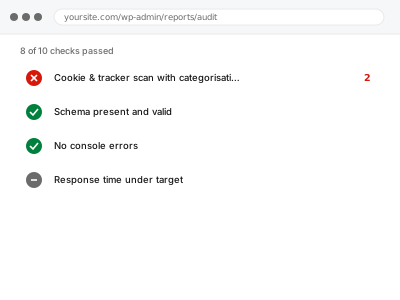
Cookies and third-party trackers scanned and categorised together in a single combined report.
Every access point to your site and its services, listed in one place for continuity.
Duplicate and near-duplicate content found across your site — unintentional, not templated.
Some of what a site needs isn’t a fix at all — it’s an honest, written account of where things currently stand: what plugins are installed and why, whether the SSL configuration actually passes a proper grade, whether a backup would actually restore, what a new developer would need to know on their first day. That knowledge usually exists somewhere, scattered across a hosting account, a few people’s memory, and whatever survives in old email threads, which is exactly why it’s missing the moment a business actually needs it — a sale, a handover, a compliance requirement, or simply the person who set the site up moving on.
What connects the work in this bucket is that the deliverable is a document or a report, not a code change: a vulnerability scan, an accessibility audit against WCAG, a credentials inventory, an onboarding pack for whoever takes the site over next. Producing it well means testing the claim rather than describing the setting — an SSL grade comes from an actual scan, not a certificate’s expiry date, and a disaster recovery plan is only credible once a restore has actually been attempted. The result is something you can hand to someone else and trust.