
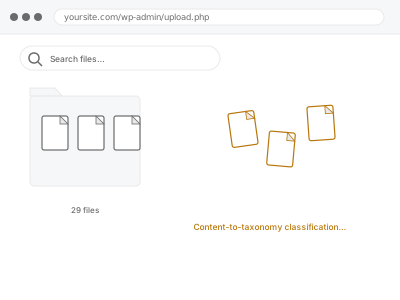
We classify existing content into your taxonomy structure by analysing what each piece actually discusses, at bulk scale — grounded in the content itself, with anything genuinely ambiguous flagged for your decision rather than force-classified. This determines where content belongs; deciding your taxonomy structure itself stays yours.
Content-to-taxonomy classification - bulk
Content classified into your existing taxonomy, with anything ambiguous flagged, not forced.
- Full backup taken before we start
- If we can’t fix it, you get your money back
- We never ask for your own password
What we need from you
- Access to the content needing classification
- Your existing taxonomy structure to classify against
- Confirmation of how to handle content that doesn’t clearly fit any existing category
This or something else?
| You want content analysed and classified into your existing taxonomy at bulk scale | This fix covers it |
| You already know exactly which content goes where and just need it applied | Bulk category & tag reassignment, in the Content & Updates bucket, the implementation step once classification is decided |
| You want the taxonomy structure itself designed, not content classified into an existing one | Outside this fix’s scope — that’s a content strategy decision |
| You want media tagged, not content classified into taxonomy | Media library tagging & categorisation – bulk, a different kind of organisation |
What we do
- Analyse each piece of content against your existing taxonomy structure
- Classify content into the most appropriate existing category or tag
- Flag anything genuinely ambiguous or not clearly fitting any category
- Apply confirmed classifications in bulk
- Verify a representative sample against the actual content
- Provide a written summary of what was classified and what was flagged
What is included
- Content classified into your existing taxonomy, grounded in actual content
- Flags for ambiguous or poorly-fitting content
- Verified accuracy on a representative sample
- A written summary
Not included
- Designing the taxonomy structure itself — that’s a content strategy decision that stays with you
- Creating new categories or tags to accommodate content that doesn’t fit — worth a separate conversation if that’s genuinely needed
- Reassigning content once you already know where it goes — a separate, simpler implementation fix
- Ongoing classification as new content is published
Questions about this fix
Will you force content into a category even if it's a poor fit?
No — anything genuinely ambiguous gets flagged for your decision rather than classified with low confidence just to complete the batch.
Is this the same as the bulk reassignment fix?
No — that implements a mapping you've already decided on; this determines where content belongs in the first place by analysing what it actually discusses.
What if a lot of content doesn't fit my current taxonomy well?
We'd flag this as a pattern worth noting, since it might suggest the taxonomy itself needs revisiting — though that broader decision stays with you.
Can this create new categories if none of the existing ones fit?
Not automatically — creating new taxonomy structure is a content strategy decision, worth a separate conversation if the classification reveals a genuine gap.
How large a content library can this handle?
This scales to a large library — more content means more to classify and verify, reflected in scope.
Related fixes
If this is the second time this year
A bad update breaking the site is a symptom of updates not being tested first. Care plans run every update on a staging clone before it reaches your live site, which is the actual fix for this happening again.
Your access, your rules
Create a separate admin account for us and delete it when we are done. For anything else, we get in touch and agree a method — never a form field on this site, never by reply to an email.
We back up first, always
Before anything is touched we take a full backup and keep it for 30 days. If a fix goes wrong, we put the site back exactly as it was.
If it is not what you bought
If the problem turns out smaller than what you ordered, we refund the difference. If it is bigger, we stop and send a quote before doing any extra work.
If we cannot fix it
You get back what we received. Diagnosis is on us — you only pay when the problem is actually solved. The payment processor takes its fee before the money reaches us, so we never hold it and it is not ours to return. That is true here as everywhere else.
If it comes back
Reply within seven days of delivery and we put it back on the bench at no cost. The fix is not finished until it holds.
What we are responsible for
If something goes wrong with a fix, our responsibility is limited to what you paid for it. We take a full backup first so mistakes can be undone, and we tell you before doing anything outside what you bought.