Plugin vendor bug report preparation
A bug report prepared for a plugin vendor with the reproduction detail their support team needs.
Some of what a site needs isn’t a fix at all — it’s an honest, written account of where things currently stand: what plugins are installed and why, whether the SSL configuration actually passes a proper grade, whether a backup would actually restore, what a new developer would need to know on their first day.
Showing 33–48 of 52 fixes
A bug report prepared for a plugin vendor with the reproduction detail their support team needs.
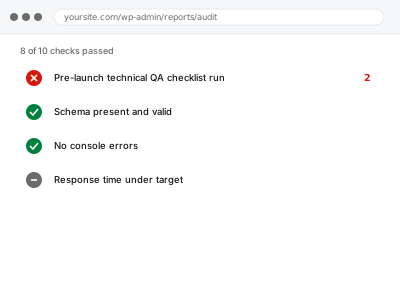
A pre-launch checklist run on staging — redirects, indexing, forms, SSL, and more.
A formal, checklist-style publishing procedure, so quality checks don't get skipped under time pressure.
A recorded walkthrough video of key admin tasks, for a team that learns better by watching.
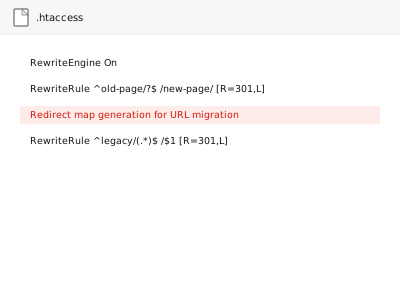
A redirect map generated from your old and new URL structures — a deliverable, not the live redirects.
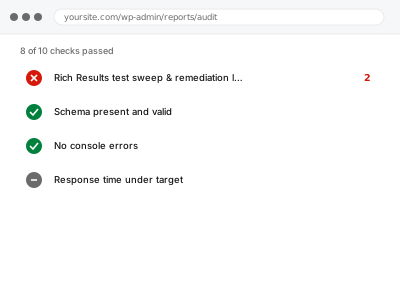
Every template swept through Google's Rich Results Test, with a prioritised list of what's blocking eligibility.
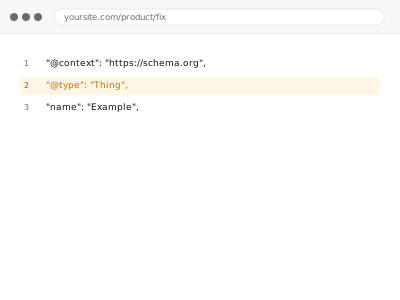
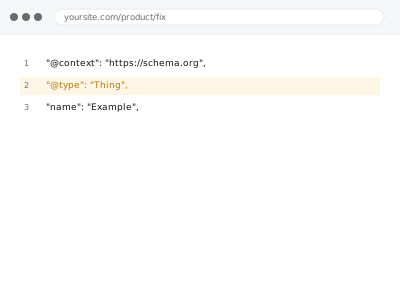
Schema generated in bulk straight from page content — no custom fields required.
Every template swept through the official Schema.org validator — broader than Google's rich-result criteria alone.
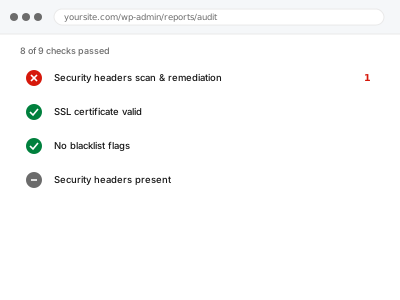
A security headers grading scan with the straightforward improvements implemented directly.
A complete documentation pack compiled — how your site is built, where things live, how to do common tasks.
An SSL Labs grade audit and a written improvement plan — without necessarily making the changes ourselves.
A technical architecture overview — hosting, integrations, how systems connect — for a technical, non-code audience.
Your theme's custom code documented at the level a developer actually needs.
A support case prepared for a theme vendor with the detail and evidence their team needs.
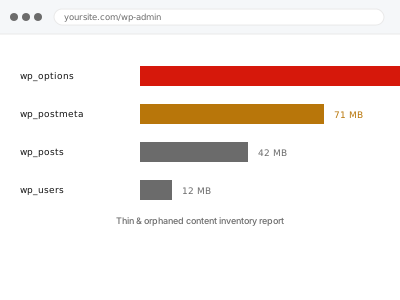
Thin and orphaned content inventoried together — a page can genuinely be both.
A register of licensed plugins, themes, and subscriptions with renewal dates and costs.
Some of what a site needs isn’t a fix at all — it’s an honest, written account of where things currently stand: what plugins are installed and why, whether the SSL configuration actually passes a proper grade, whether a backup would actually restore, what a new developer would need to know on their first day. That knowledge usually exists somewhere, scattered across a hosting account, a few people’s memory, and whatever survives in old email threads, which is exactly why it’s missing the moment a business actually needs it — a sale, a handover, a compliance requirement, or simply the person who set the site up moving on.
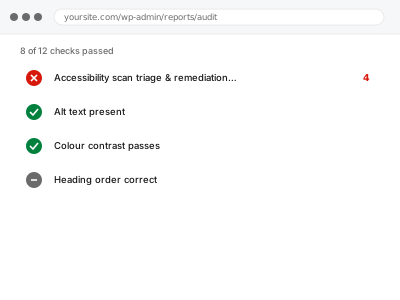
What connects the work in this bucket is that the deliverable is a document or a report, not a code change: a vulnerability scan, an accessibility audit against WCAG, a credentials inventory, an onboarding pack for whoever takes the site over next. Producing it well means testing the claim rather than describing the setting — an SSL grade comes from an actual scan, not a certificate’s expiry date, and a disaster recovery plan is only credible once a restore has actually been attempted. The result is something you can hand to someone else and trust.