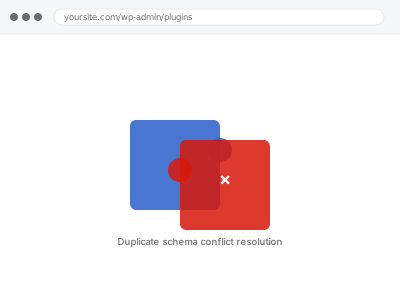
SCH-001
Duplicate schema conflict resolution
Two sources outputting schema for the same page, resolved to one correct one.
Quick Dashboard / config
Needs: WP admin login

When a page isn’t showing up in Google, or increasingly in an AI-generated answer, the cause is almost never that the content is bad — it’s a technical signal telling the crawler something the page doesn’t actually mean.
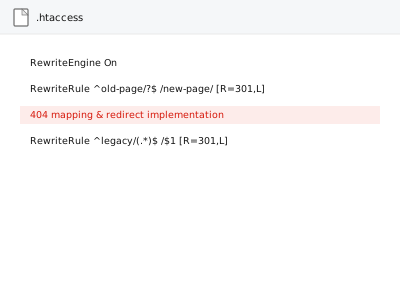 LNK-005 404 mapping & redirect implementation
$109.3248 hours
LNK-005 404 mapping & redirect implementation
$109.3248 hours
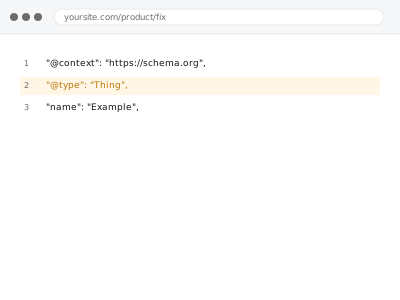 SCH-004 Breadcrumb & Article schema implementation
$109.3248 hours
SCH-004 Breadcrumb & Article schema implementation
$109.3248 hours
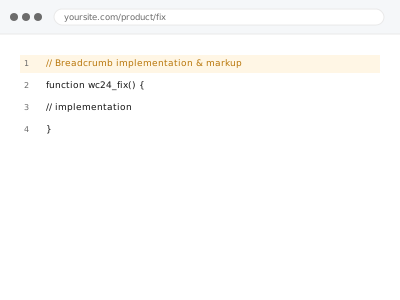 SEO-013 Breadcrumb implementation & markup
$109.3248 hours
SEO-013 Breadcrumb implementation & markup
$109.3248 hours
Showing 17–32 of 66 fixes
Two sources outputting schema for the same page, resolved to one correct one.
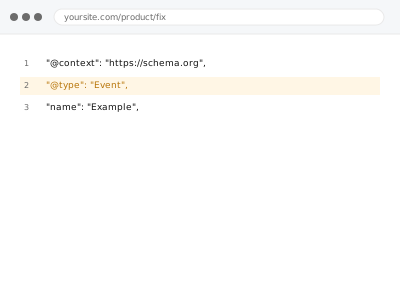
Event schema built from your confirmed date, time, and location details.
Faceted navigation URLs brought under control before they dilute crawl and ranking signal.
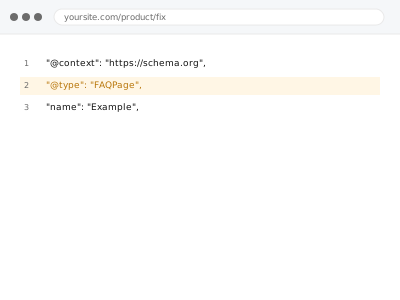
Existing FAQ or how-to content marked up as schema — not new content written to fit it.
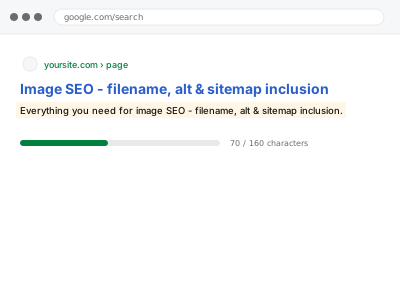
Image filenames, alt text, and sitemap inclusion set from what's actually true about each image.
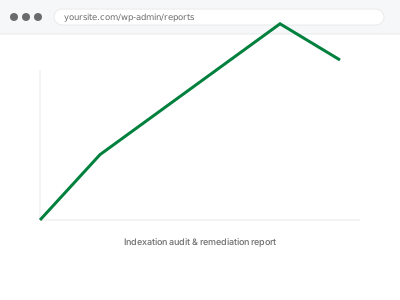
A comprehensive report on why pages aren't indexed, pulling every relevant signal together.
Internal links still pointing at an old slug, updated to the current URL directly.
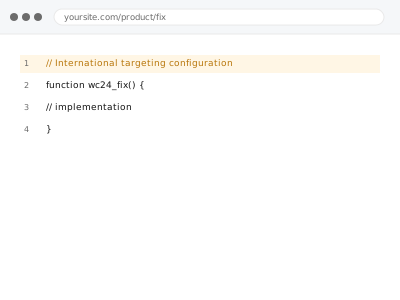
hreflang and international targeting configured so the right region sees the right version.
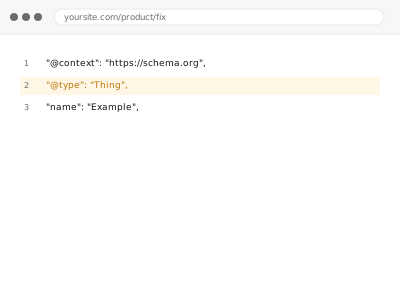
Valid schema a page builder strips on save, re-implemented so it actually survives editing.
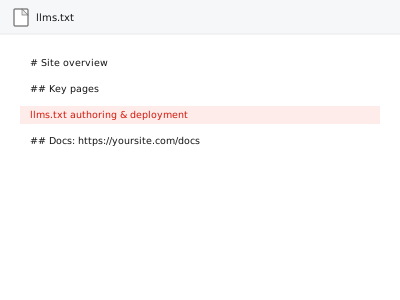
An llms.txt file structured from facts you provide — we don't invent claims about your business.
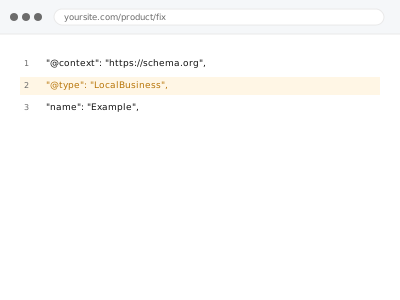
LocalBusiness schema built from your confirmed name, address, hours, and service area.
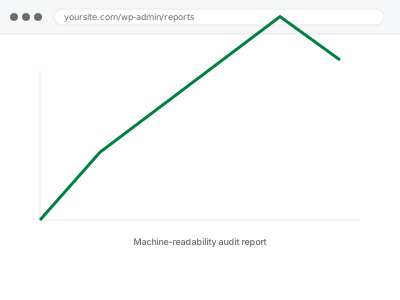
A full, prioritised report on your site's machine-readability — a report, not a fix.
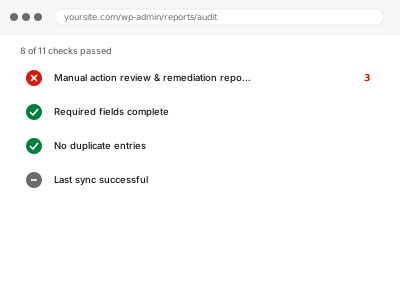
A manual action's exact cause investigated — technical fixed directly, content-quality explained plainly.
Every noindex tag on the site audited against what's actually intended, not just what's inherited.
Mixed content warnings traced to their exact insecure source and resolved.
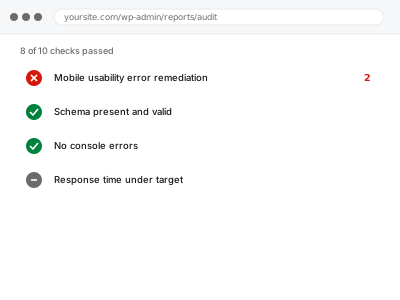
Specific, named mobile usability errors from Search Console, fixed one by one.
When a page isn’t showing up in Google, or increasingly in an AI-generated answer, the cause is almost never that the content is bad — it’s a technical signal telling the crawler something the page doesn’t actually mean. A canonical tag can point at the wrong URL. A robots.txt rule written for one section can accidentally block another. Schema markup can be duplicated, or broken by a page builder that doesn’t know a plugin already added it. A sitemap can list pages that no longer exist, or fail to list the ones that do. AI crawlers add a newer version of the same problem: whether llms.txt exists, whether content renders without JavaScript, whether the structured data around it is actually machine-readable rather than just visually correct.
These fixes have in common that the result is invisible until you check the platform’s own tools — Search Console, a schema validator, a crawler simulator — rather than the page itself, which looks completely fine to a human either way. The work is finding the specific signal that’s wrong or contradicting another one, correcting it, and confirming the correction was actually picked up, not just published.