SEO-005
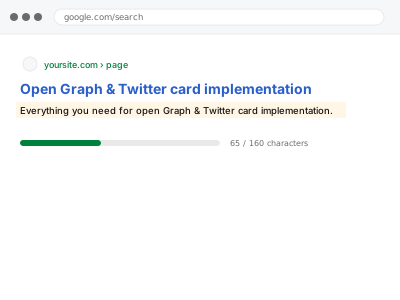
Open Graph & Twitter card implementation
Open Graph and Twitter Card tags so a shared link previews correctly instead of guessing.
Quick Code & template
Needs: WP admin login

When a page isn’t showing up in Google, or increasingly in an AI-generated answer, the cause is almost never that the content is bad — it’s a technical signal telling the crawler something the page doesn’t actually mean.
 LNK-005 404 mapping & redirect implementation
$109.3248 hours
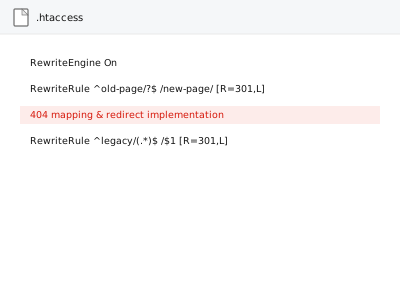
LNK-005 404 mapping & redirect implementation
$109.3248 hours
 SCH-004 Breadcrumb & Article schema implementation
$109.3248 hours
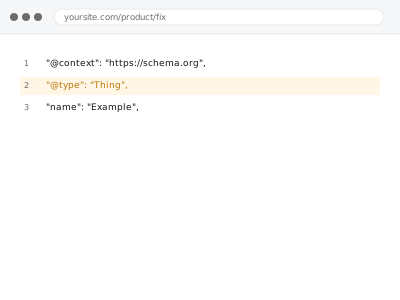
SCH-004 Breadcrumb & Article schema implementation
$109.3248 hours
 SEO-013 Breadcrumb implementation & markup
$109.3248 hours
SEO-013 Breadcrumb implementation & markup
$109.3248 hours
Showing 33–48 of 66 fixes
Open Graph and Twitter Card tags so a shared link previews correctly instead of guessing.
Organization and WebSite schema connected into one coherent, confirmed entity.
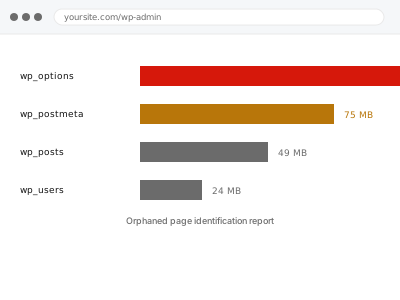
Every page with no internal links pointing to it, found in one report.
Outbound links audited and tagged by their actual relationship — sponsored, ugc, or editorial.
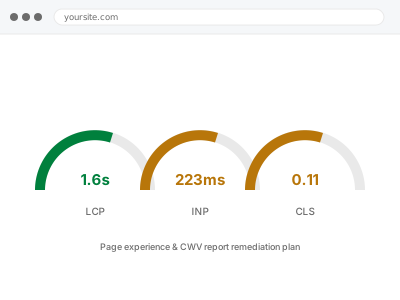
Page experience signals pulled together into one prioritised, actionable remediation plan.
Pagination or archive routing that breaks a few pages deep, found and fixed.
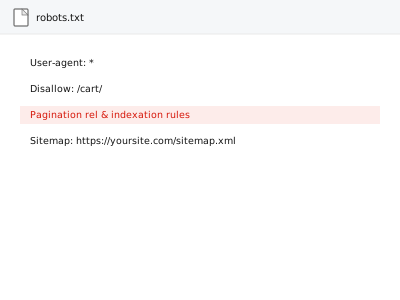
Paginated archives given clear indexation rules instead of reading as orphaned duplicates.
A permalink structure change tested on staging first, with full redirect coverage before cutover.
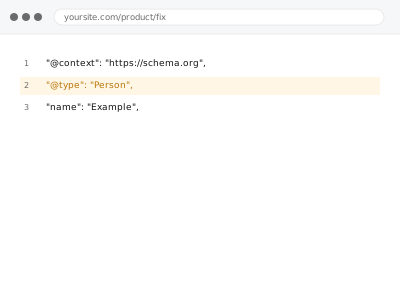
An author or team member identified as a schema entity, from their confirmed bio.
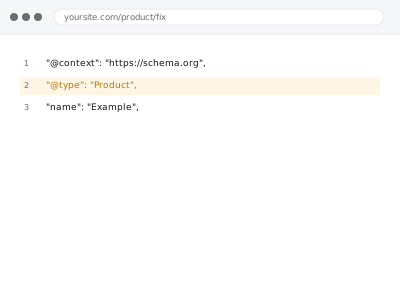
Product and Offer schema pulled live from your actual WooCommerce data.
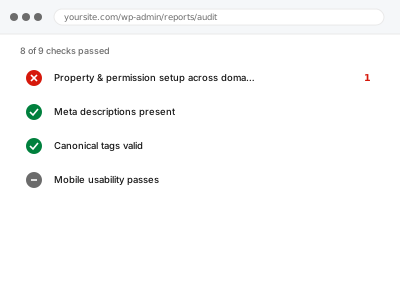
Search Console properties and permissions set up correctly across every domain you actually run.
Parameter-based URL variations given consistent rules instead of crawling as separate pages.
Redirect chains consolidated to one hop, and loops that never resolve broken open.
Redirects scattered across plugins and server rules, consolidated into one clear source.
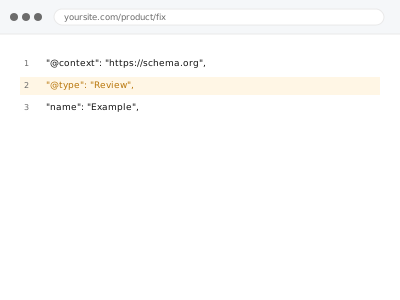
Real, existing reviews surfaced as schema — never fabricated or inflated ratings.
robots.txt reviewed line by line for rules quietly blocking what you actually want crawled.
When a page isn’t showing up in Google, or increasingly in an AI-generated answer, the cause is almost never that the content is bad — it’s a technical signal telling the crawler something the page doesn’t actually mean. A canonical tag can point at the wrong URL. A robots.txt rule written for one section can accidentally block another. Schema markup can be duplicated, or broken by a page builder that doesn’t know a plugin already added it. A sitemap can list pages that no longer exist, or fail to list the ones that do. AI crawlers add a newer version of the same problem: whether llms.txt exists, whether content renders without JavaScript, whether the structured data around it is actually machine-readable rather than just visually correct.
These fixes have in common that the result is invisible until you check the platform’s own tools — Search Console, a schema validator, a crawler simulator — rather than the page itself, which looks completely fine to a human either way. The work is finding the specific signal that’s wrong or contradicting another one, correcting it, and confirming the correction was actually picked up, not just published.