USR-006
Admin menu & dashboard access cleanup
Dashboard menus cleaned up per role, so people see only what's relevant to their job.
Quick Dashboard / config
Needs: WP admin login

Security, access and backup problems share a cause more often than not: a site accumulates plugins, user accounts, integrations and admin logins over years, and each one is a door that has to be individually locked, remembered and eventually removed.
USR-006 Admin menu & dashboard access cleanup
$41.5348 hours
 PRV-009 Age gate / restricted access implementation
$109.3248 hours
PRV-009 Age gate / restricted access implementation
$109.3248 hours
 BAK-007 Backup failure diagnosis
$41.5348 hours
BAK-007 Backup failure diagnosis
$41.5348 hours
Showing 1–16 of 54 fixes
Dashboard menus cleaned up per role, so people see only what's relevant to their job.
An age or eligibility gate that genuinely blocks access until confirmed, not just displays a notice.
A backup that quietly stopped succeeding, found and fixed, with alerting so it's caught faster next time.
An existing backup tested with a real restoration, not just trusted because it ran on schedule.
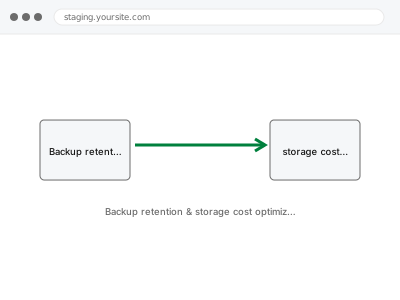
Backup retention balanced between genuine recovery need and what you're paying to store copies you'll never open.
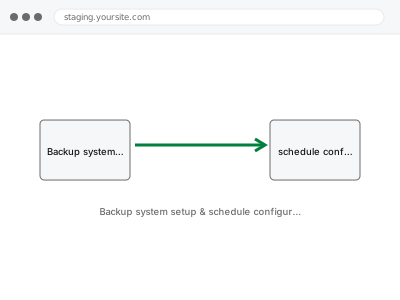
A backup schedule and destination actually matched to how often your site changes.
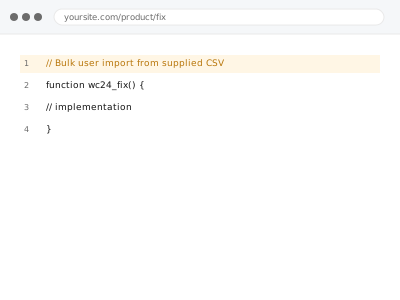
A CSV of users imported cleanly, with the messy rows caught before they become a problem.
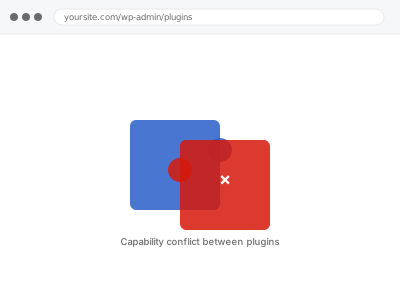
Two plugins silently overwriting the same role's capabilities, isolated and resolved.
Cloudflare's firewall configured to filter attacks before they reach your server at all.
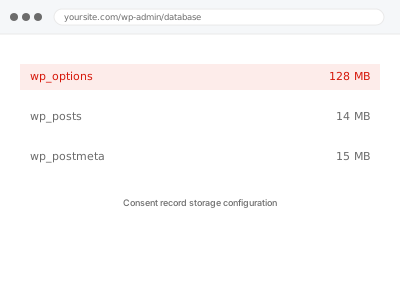
Consent choices recorded reliably, so you can show what a visitor agreed to, and when.
Scripts still running after a decline — found and genuinely gated behind real consent.
Specific content pulled from staging into live, without touching anything else on either side.
Every cookie your site actually sets, categorised — a report, not a fix.
A cookie banner that actually blocks scripts until consent, not just one that appears.
A custom role built to exactly the capabilities a job needs, no more and no less.
Your admin username changed off the first guess every automated attack tries.
Security, access and backup problems share a cause more often than not: a site accumulates plugins, user accounts, integrations and admin logins over years, and each one is a door that has to be individually locked, remembered and eventually removed. A dormant admin account from a past freelancer becomes the way a site gets compromised. A backup that’s been running silently for two years fails the one time it’s actually needed, because nobody ever tested a restore. A firewall rule blocks a legitimate integration, or a login limiter locks out a real customer, because it was configured once and never revisited since.
What connects these fixes is that they’re rarely about installing one more piece of security software — most of the work here is auditing what already exists, closing the specific access point that’s exposed, and verifying that a safeguard actually works rather than assuming it does because it’s switched on. A backup system is only proven by a successful restore. A hardening pass is only proven by checking what it actually changed. The work is confirmation as much as configuration, because an untested safeguard isn’t meaningfully different from having none.