Outdated software inventory & upgrade plan
A full inventory of what's outdated, prioritised by real risk — not the updates themselves.
Security, access and backup problems share a cause more often than not: a site accumulates plugins, user accounts, integrations and admin logins over years, and each one is a door that has to be individually locked, remembered and eventually removed.
Showing 33–48 of 54 fixes
A full inventory of what's outdated, prioritised by real risk — not the updates themselves.
A post-cleanup review confirming the door is actually closed — this isn't the cleanup itself.
Your privacy policy linked everywhere it's actually expected, not just sitting on its own page.
Usernames quietly leaking through the REST API or author archives, found and closed.
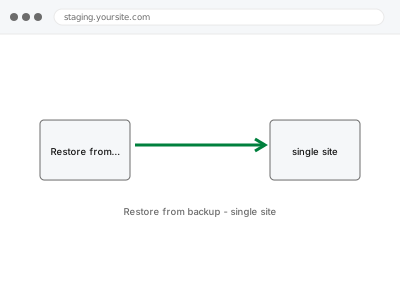
A restore to a known-good point — and if it's hack-related, a plain note that closing the door is a separate step.
The standard hardening steps applied to a currently clean site — this closes doors, it doesn't clean up one that's already been broken into.
Security headers like CSP and HSTS implemented, built around what your site actually loads.
A security plugin blocking something legitimate, reproduced and fixed without weakening real protection.
An SSL/TLS grade below A, tightened by removing outdated protocols and weak ciphers.
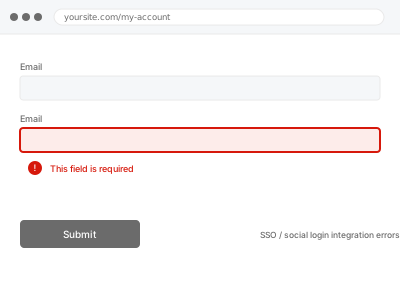
SSO or social login broken by a drifted API key or redirect URL — found and reconnected.
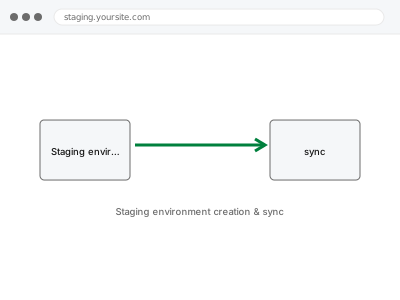
An isolated staging copy of your site, blocked from search engines, ready to test changes safely.
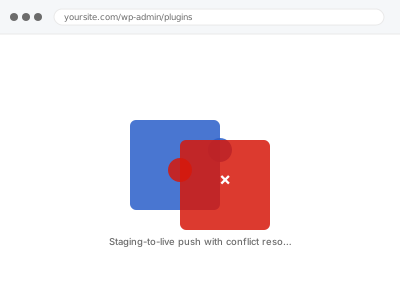
Staging pushed to live without silently overwriting orders or content that changed in the meantime.
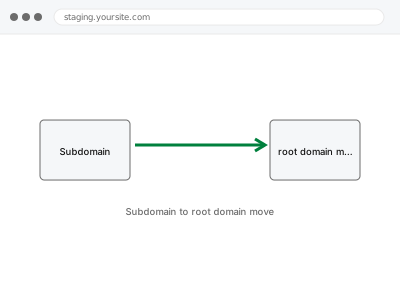
A move from subdomain to root domain, with every old URL redirected to its new home.
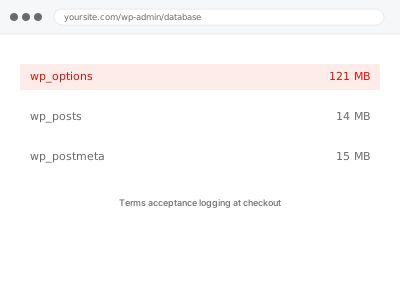
Terms acceptance logged with a timestamp at checkout, tied to the order and the terms version shown.
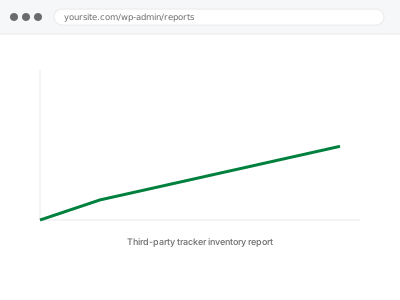
A full inventory of every third party your site quietly sends data to.
Two-factor authentication set up and tested, so a stolen password alone isn't enough.
Security, access and backup problems share a cause more often than not: a site accumulates plugins, user accounts, integrations and admin logins over years, and each one is a door that has to be individually locked, remembered and eventually removed. A dormant admin account from a past freelancer becomes the way a site gets compromised. A backup that’s been running silently for two years fails the one time it’s actually needed, because nobody ever tested a restore. A firewall rule blocks a legitimate integration, or a login limiter locks out a real customer, because it was configured once and never revisited since.
What connects these fixes is that they’re rarely about installing one more piece of security software — most of the work here is auditing what already exists, closing the specific access point that’s exposed, and verifying that a safeguard actually works rather than assuming it does because it’s switched on. A backup system is only proven by a successful restore. A hardening pass is only proven by checking what it actually changed. The work is confirmation as much as configuration, because an untested safeguard isn’t meaningfully different from having none.