Reduced motion preference support
Animation made conditional on a visitor's reduced motion setting — respected, not removed for everyone.
Nothing here is broken. This is the work a site accumulates while it is running normally — content that needs updating, an integration that needs building, a report someone has asked for, hosting that needs moving or documenting.
Showing 193–208 of 248 fixes
Animation made conditional on a visitor's reduced motion setting — respected, not removed for everyone.
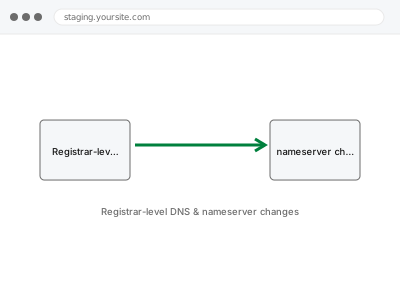
Specific DNS or nameserver changes made carefully, with the prior setup documented first.
Repeater rows or relationship fields breaking, traced to data or display, not guessed at.
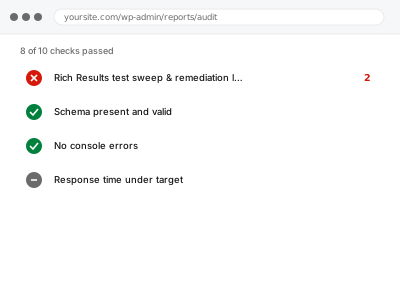
Every template swept through Google's Rich Results Test, with a prioritised list of what's blocking eligibility.
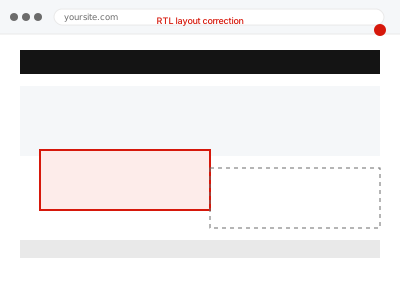
RTL layout properly mirrored — navigation, icons, and alignment, not just the text direction.
Every connected third-party account inventoried — shared passwords flagged against real delegated access.
A report that generates and delivers on schedule — with a plain warning that its failure is easy to miss.
A scheduled task built and documented — with a plain answer for what happens when it fails.
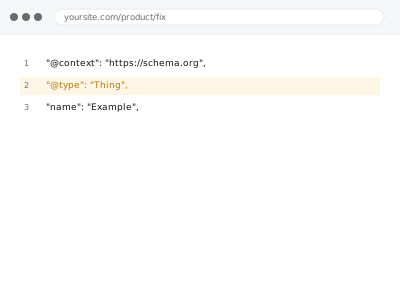
Schema generated in bulk straight from page content — no custom fields required.
Every template swept through the official Schema.org validator — broader than Google's rich-result criteria alone.
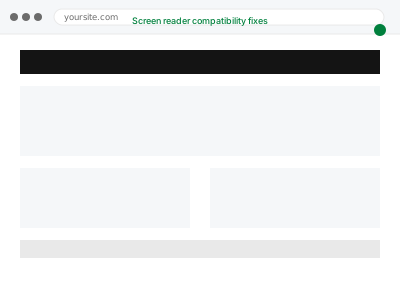
Screen reader reading order, skipped content, and silent updates — tested and fixed directly.
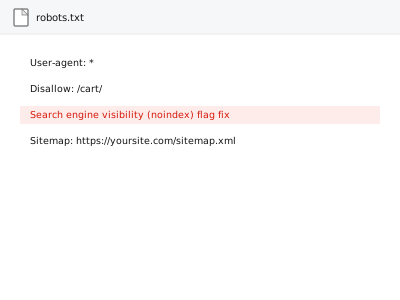
One checkbox left ticked since before launch — the most common reason a site never shows in search.
Security event alerting configured — the one monitor where a silent failure matters most.
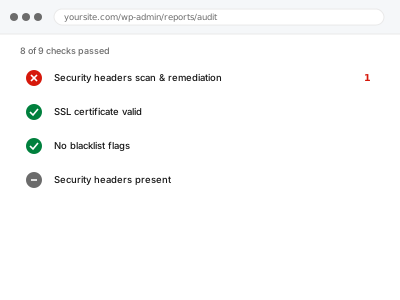
A security headers grading scan with the straightforward improvements implemented directly.
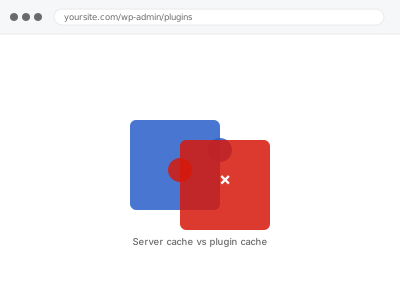
Server cache and plugin cache fighting each other, coordinated instead of left to conflict.
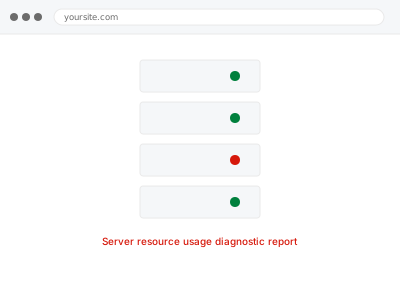
A one-time snapshot of what's actually consuming your server's resources right now.
Nothing here is broken. This is the work a site accumulates while it is running normally — content that needs updating, an integration that needs building, a report someone has asked for, hosting that needs moving or documenting.
It is priced the same way as the fixes and for the same reason: each one is a defined piece of work with a known shape, so the page can say what it costs and when it will be done rather than quoting for it.
What differs is how you arrive. Nobody lands here from an error message. You come with a task you have already decided you want, and the only open questions are the price and the date. If you are not sure whether what you need is a fault or a task, describe it and we will point you at the right one.