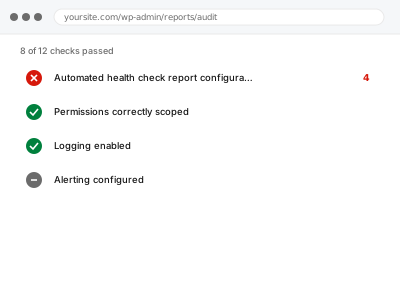
Automated health check report configuration
A combined health check report on schedule — with the same warning about an absent report.
Nothing here is broken. This is the work a site accumulates while it is running normally — content that needs updating, an integration that needs building, a report someone has asked for, hosting that needs moving or documenting.
Showing 17–32 of 248 fixes
A combined health check report on schedule — with the same warning about an absent report.
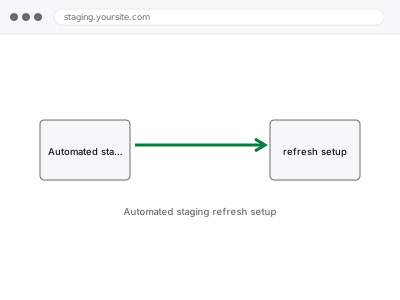
Staging refreshed from live automatically, so it never drifts stale between uses.
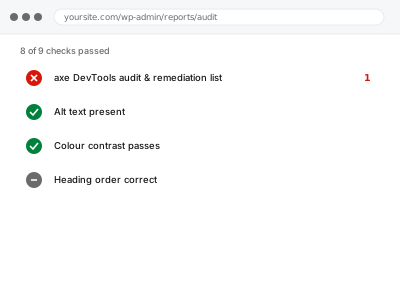
An axe DevTools scan with developer-ready technical detail on every issue found.
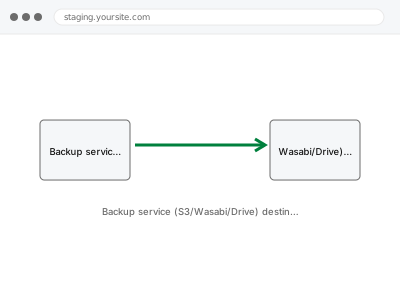
A genuine offsite backup destination connected through scoped credentials — the account stays yours.
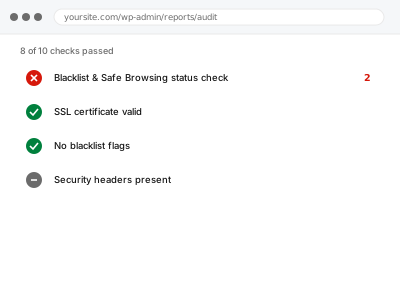
Your domain checked against Google Safe Browsing and major blacklists — status, not delisting.
A confirmed blacklist or Safe Browsing flag submitted for delisting and tracked to resolution.
One finished blog post, formatted and published exactly as you wrote it.
Up to 10 finished blog posts, formatted and published as a batch.
Up to 30 finished blog posts, formatted and published — suited to a full blog migration.
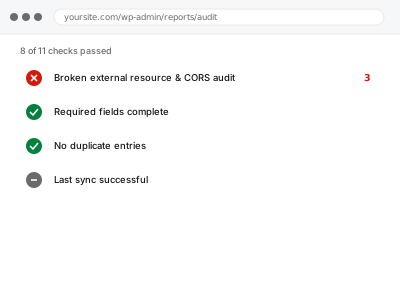
External scripts, fonts, and embeds audited for load failures and CORS-specific console errors.
Broken link monitoring that keeps checking after we leave — with the same silent-failure warning.
Posts reassigned to a different author in bulk, from a mapping you supply.
Posts or products reassigned to categories and tags in bulk, from a mapping you supply.
A one-time bulk data transformation, tested on staging first — no script left running after.
A specific text string replaced consistently across your content, previewed before it runs.
A one-time bulk action across users or content, tested on staging, nothing left running after.
Nothing here is broken. This is the work a site accumulates while it is running normally — content that needs updating, an integration that needs building, a report someone has asked for, hosting that needs moving or documenting.
It is priced the same way as the fixes and for the same reason: each one is a defined piece of work with a known shape, so the page can say what it costs and when it will be done rather than quoting for it.
What differs is how you arrive. Nobody lands here from an error message. You come with a task you have already decided you want, and the only open questions are the price and the date. If you are not sure whether what you need is a fault or a task, describe it and we will point you at the right one.