Data structure documentation report
Every custom post type, taxonomy, and field documented in one clear reference.
Nothing here is broken. This is the work a site accumulates while it is running normally — content that needs updating, an integration that needs building, a report someone has asked for, hosting that needs moving or documenting.
Showing 65–80 of 248 fixes
Every custom post type, taxonomy, and field documented in one clear reference.
A new database created with a user scoped to only the access it actually needs.
Routine database cleanup automated within a carefully defined, documented boundary.
Debug mode left exposing errors publicly, disabled without losing your private error log.
A deployment script your team runs deliberately — documented so it's not a black box later.
What's actually eating your disk space, found and cleaned up with your confirmation first.
A DNS discrepancy found by auditing the full zone when you don't know which record is wrong.
DNS records corrected right inside your control panel, with the prior zone documented first.
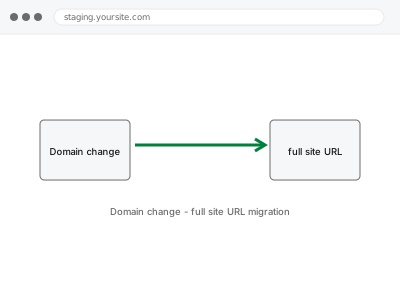
A complete domain change — database, code, and DNS together, with redirects from the old one.
A subsite's mapped domain not resolving correctly, traced from DNS through to SSL coverage.
Duplicate and near-duplicate content found across your site — unintentional, not templated.
A plain-language guide for your content team, written for how your site actually works.
Email accounts and forwarders created and tested — not a migration from another provider.
A quick deliverability score test and fix list — narrower and faster than a full audit.
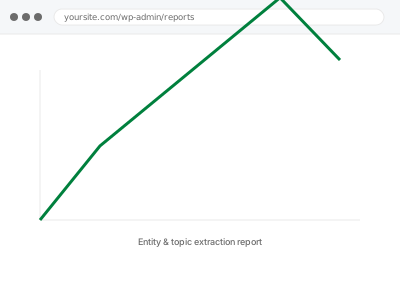
A report on which entities and topics your content actually covers — not what it should cover.
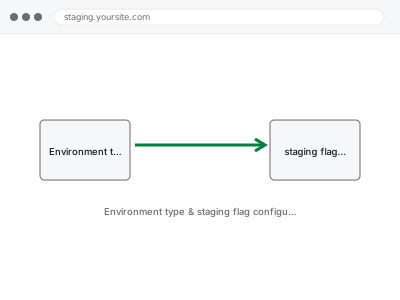
The environment type flag set correctly per site instance — production, staging, or development.
Nothing here is broken. This is the work a site accumulates while it is running normally — content that needs updating, an integration that needs building, a report someone has asked for, hosting that needs moving or documenting.
It is priced the same way as the fixes and for the same reason: each one is a defined piece of work with a known shape, so the page can say what it costs and when it will be done rather than quoting for it.
What differs is how you arrive. Nobody lands here from an error message. You come with a task you have already decided you want, and the only open questions are the price and the date. If you are not sure whether what you need is a fault or a task, describe it and we will point you at the right one.