Content rollback to previous revision – bulk
Several pages rolled back to a confirmed prior revision after a bad bulk edit.
Nothing here is broken. This is the work a site accumulates while it is running normally — content that needs updating, an integration that needs building, a report someone has asked for, hosting that needs moving or documenting.
Showing 49–64 of 248 fixes
Several pages rolled back to a confirmed prior revision after a bad bulk edit.
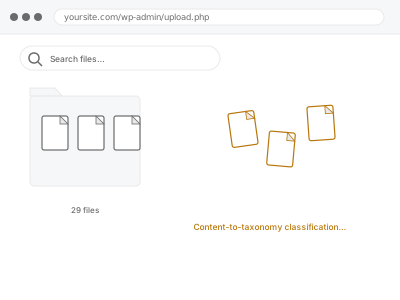
Content classified into your existing taxonomy, with anything ambiguous flagged, not forced.
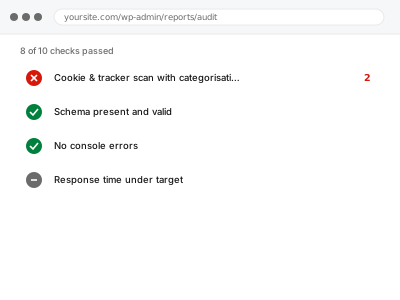
Cookies and third-party trackers scanned and categorised together in a single combined report.
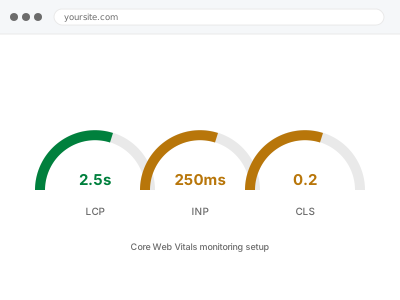
Core Web Vitals tracked over time, not just a single snapshot — watching it stays with you.
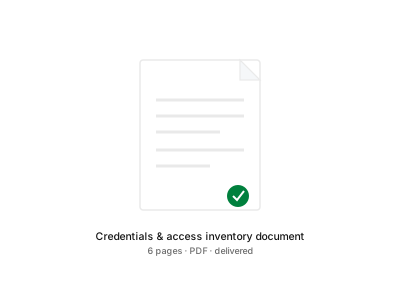
Every access point to your site and its services, listed in one place for continuity.
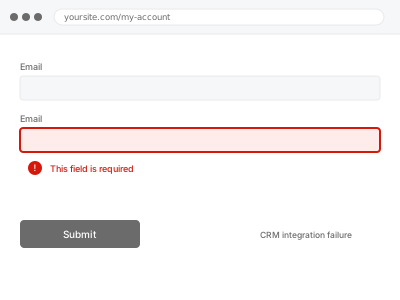
A CRM connection restored on your site's side — a genuine outage on theirs stays theirs to fix.
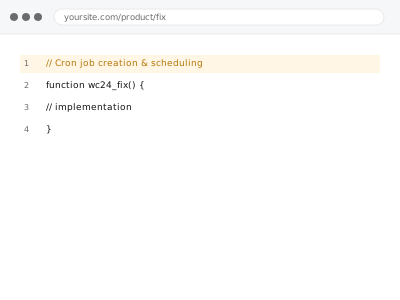
A cron job created and scheduled through your control panel — the straightforward version, not custom code.
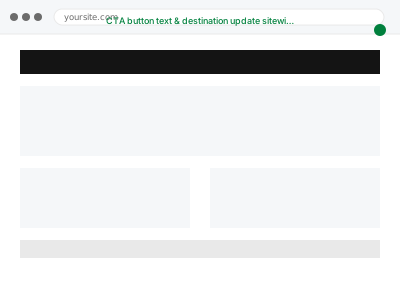
One CTA button's text and destination updated consistently everywhere it appears.
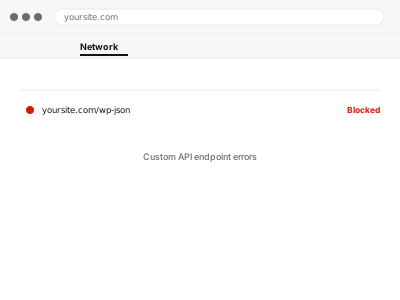
A custom API endpoint erroring out, traced to the exact failing request and fixed.
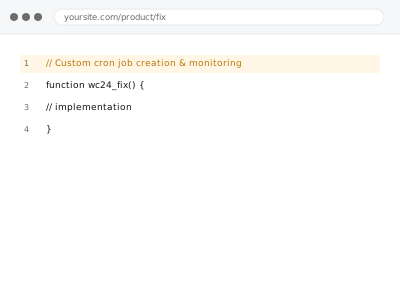
A genuine server-level cron job, with logging and alerts — watching it stays your responsibility.
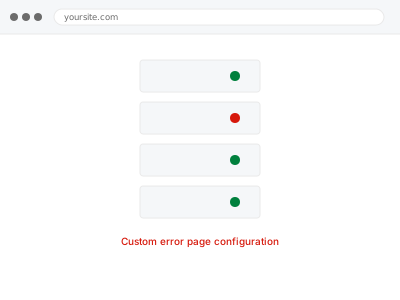
Custom error pages replacing your host's generic default for 404s and worse.
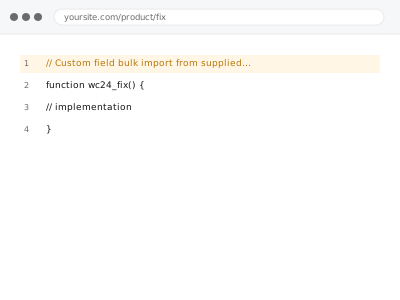
Custom field data you supply, imported at scale into the correct existing fields.
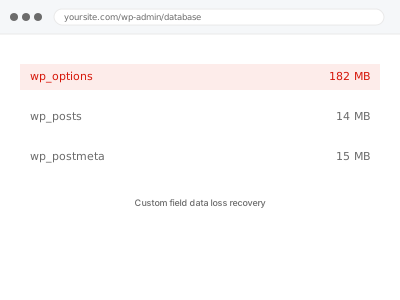
Custom field data that looks gone — checked against the database before assuming it's lost.
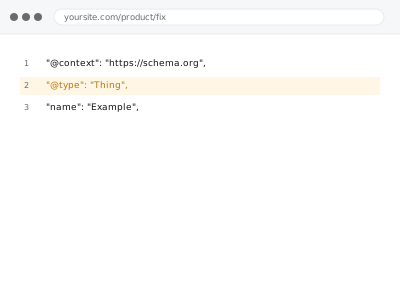
Existing custom field data mapped into schema markup — reflecting what's there, not inventing it.
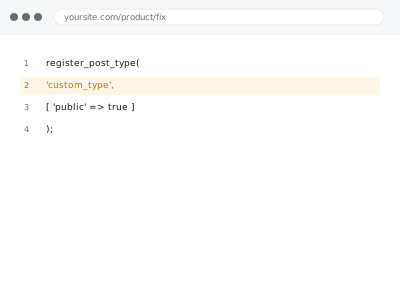
A custom post type missing from admin or 404ing on the front end, traced to the registration.
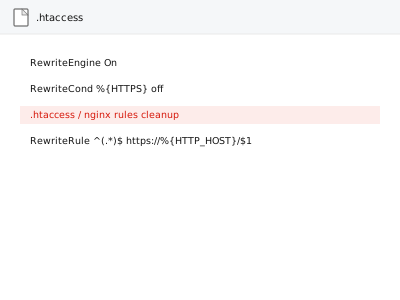
A custom taxonomy not registering or resolving, fixed alongside its rewrite rules.
Nothing here is broken. This is the work a site accumulates while it is running normally — content that needs updating, an integration that needs building, a report someone has asked for, hosting that needs moving or documenting.
It is priced the same way as the fixes and for the same reason: each one is a defined piece of work with a known shape, so the page can say what it costs and when it will be done rather than quoting for it.
What differs is how you arrive. Nobody lands here from an error message. You come with a task you have already decided you want, and the only open questions are the price and the date. If you are not sure whether what you need is a fault or a task, describe it and we will point you at the right one.